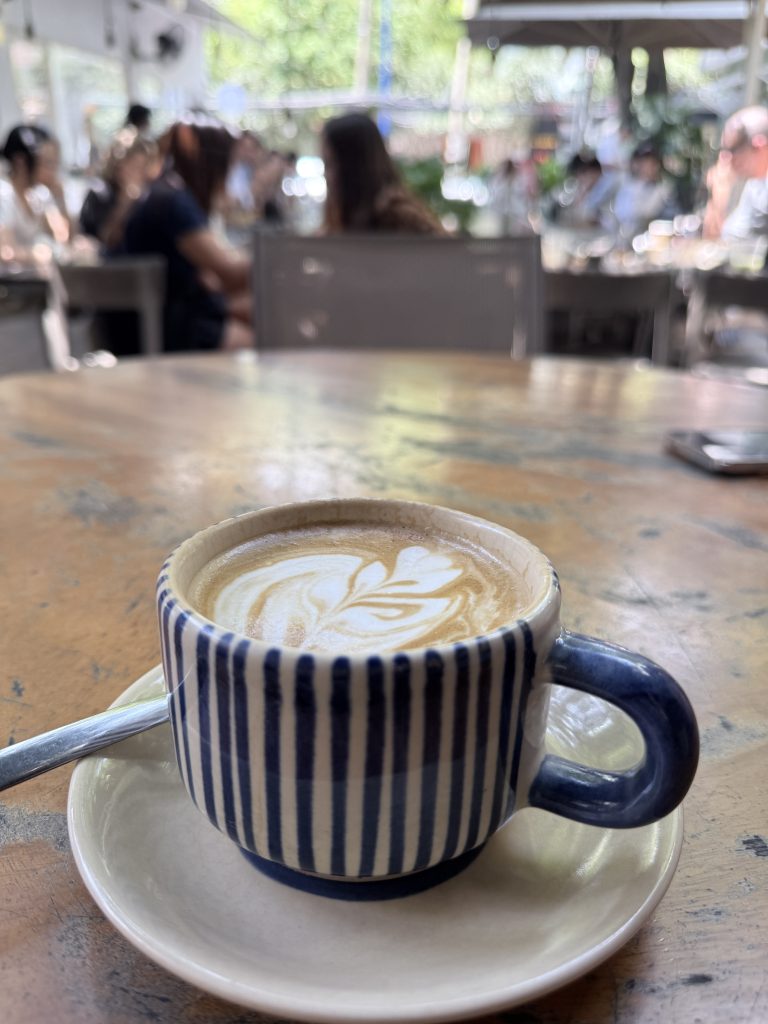
On a typical afternoon in Vietnam, I found myself wandering through the streets of Thao Dien and stopped by ‘Cashew Coffee.’ As someone who has always stuck strictly to black coffee, I didn’t expect to be swayed—but the latte here changed everything.
The latte here isn’t just smooth; it leaves a rich, lingering flavor that feels exactly like savoring fresh roasted nuts. For someone who loves the clean finish of black coffee, this was a moment of true revelation, opening my eyes to a whole new charm of lattes.
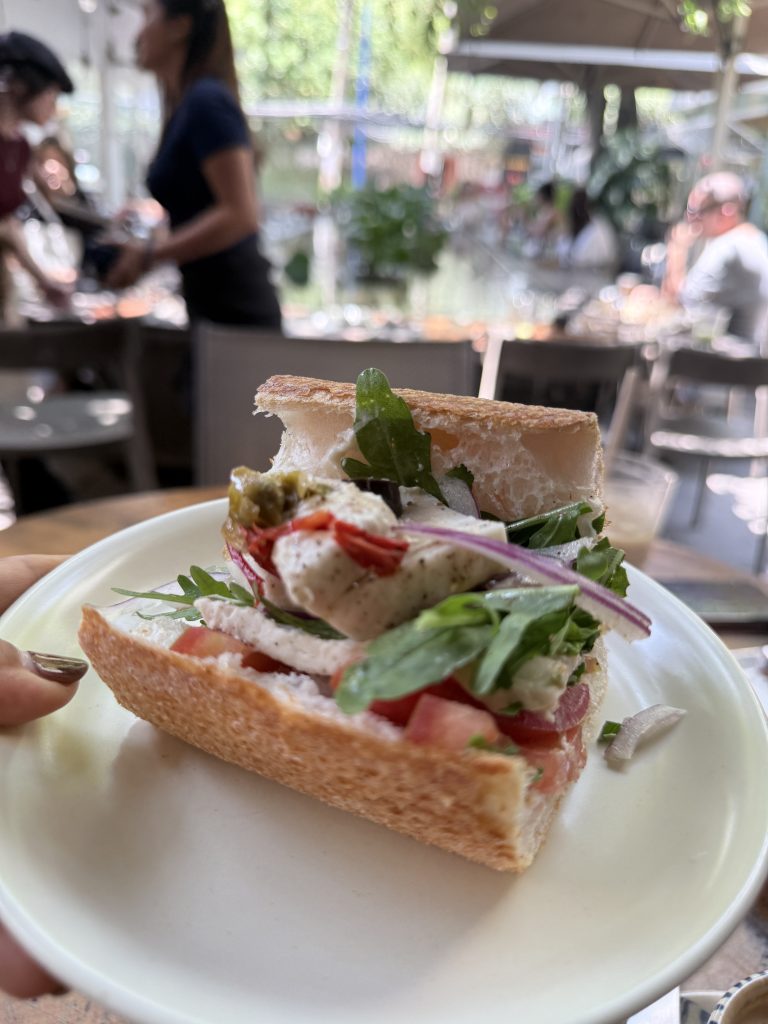
If you visit, there is one item you absolutely must try alongside your coffee: the baguette sandwich. Made with fresh vegetables and wholesome ingredients, it is the signature must-try item at Cashew Coffee.
The harmony of the crispy-on-the-outside, soft-on-the-inside baguette paired with the fresh filling makes every bite feel like a perfect embodiment of the laid-back Thao Dien vibe.
If you want to step away from the busy daily routine and enjoy a quiet afternoon, why not treat yourself to a nut-like, savory latte and a delicious baguette sandwich at Cashew Coffee in Thao Dien? I hope this little note of mine serves as a pleasant inspiration for all of you who love Vietnam.
When I first moved to Vietnam, one of the biggest cultural hurdles I faced was not the language barrier, but the smiles. Whenever someone made a mistake—be it a minor mishap at a local shop or a scheduling error—the reaction wasn’t an apology. Instead, I was met with a shy, subtle smile.
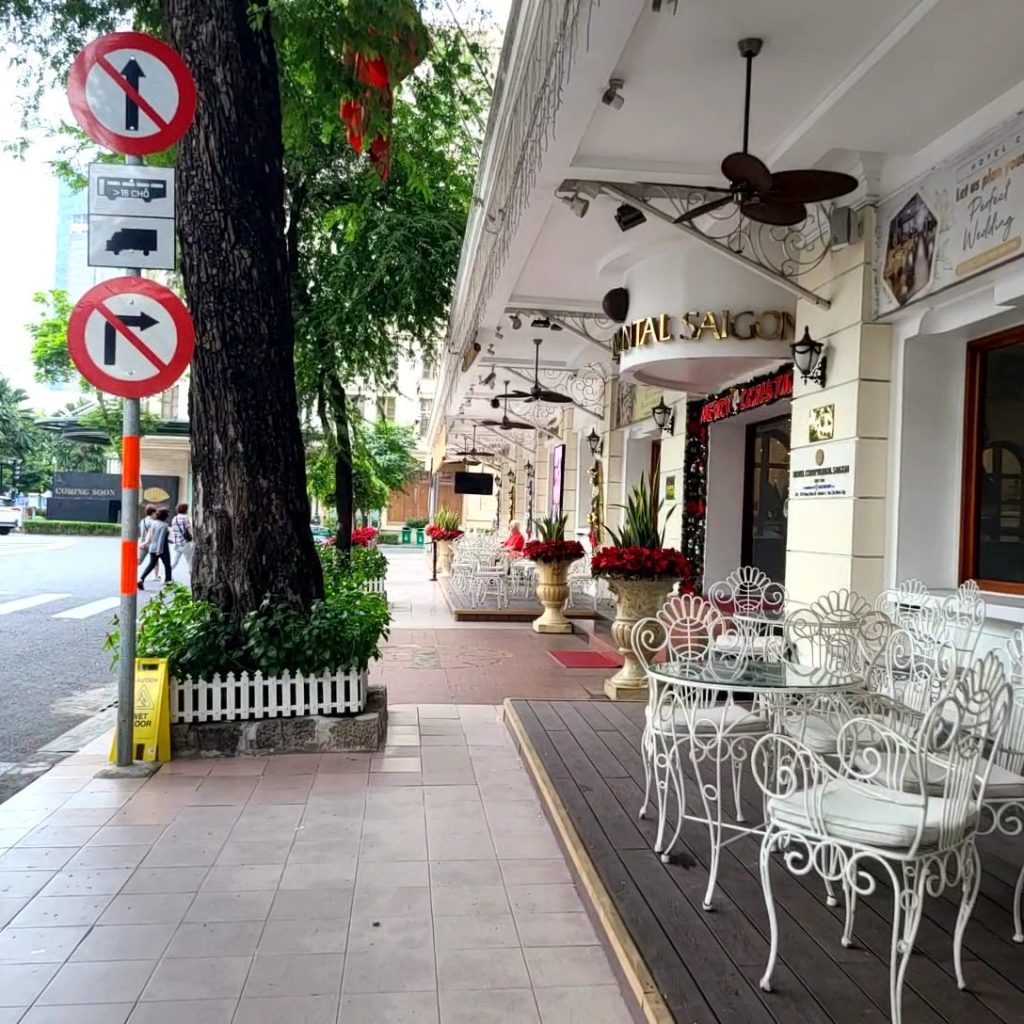
(In front of the Continental Hotel in Ho Chi Minh city)
The streets of Ho Chi Minh City, where countless untold stories and cultural nuances reside. Initially, I found this deeply frustrating. To me, it felt as if my concerns were being brushed aside. I wondered, “Are they even aware of their mistake? Do they not feel sorry at all?” I felt ignored and, at times, even disrespected. In my own cultural framework, a mistake requires a verbal acknowledgment—a direct “I’m sorry”—to validate the other person’s feelings. However, after living here for years and becoming fluent in the language, my perspective shifted entirely. I began to see beneath the surface. I realized that this smile was never about disrespect. In Vietnamese culture, directly admitting a mistake can be perceived as an awkward confrontation that risks one’s “face” and disrupts social harmony. The smile is a defense mechanism—a gentle, silent language used to diffuse tension and signal, “I am uncomfortable, please let’s keep the peace.”
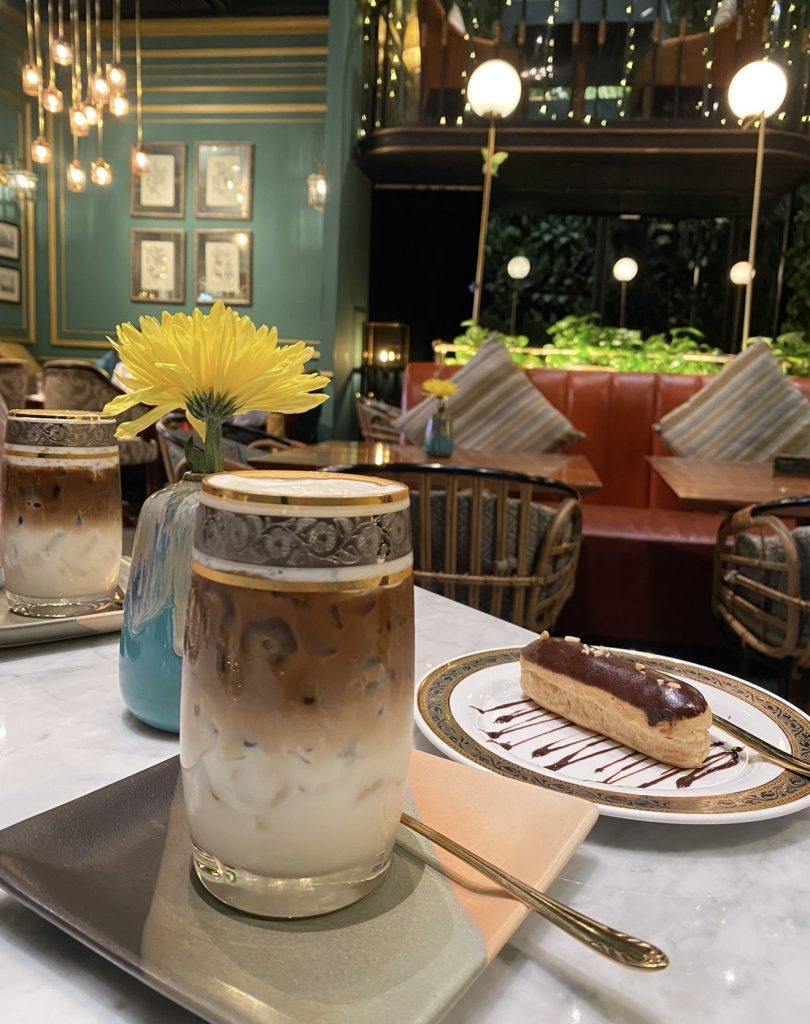
(Runam cafe in Saigon Center)
Finding peace and reflection in a local cafe, where the depth of Vietnamese culture can be felt over a cup of coffee.
Bridging the Cultural Gap I know that for those from Western cultures, where “sorry” is reflexive, this might remain difficult to grasp. You might want to ask, “Why not just say it?” But even if it feels foreign, we must avoid dismissing this culture as “wrong.” These smiles are the result of a value system prioritizing community harmony. To ignore that history and merely judge from the outside is a form of disrespect. That said, I believe there is a space for growth. As Vietnam integrates into the global community, the need for a new “social language”—one where mistakes are clearly articulated—is becoming important. True maturity in communication comes when we embrace the courage of a verbal apology. It doesn’t break a relationship; it strengthens it through trust. Now, when I see that smile, I no longer feel anger. I recognize the vulnerability and the desire for harmony behind it. Understanding a culture doesn’t mean you have to agree with every aspect; it means acknowledging its roots with kindness while gently encouraging it toward