Posted on Leave a comment

An Afternoon in Thao Dien: Finding Quiet Moments at Kashew Coffee

A Symphony of Shared Solitude in the Heart of the City

Walking through the vibrant, bustling streets of Thao Dien, I often find myself searching for a place where the pace of life slows down. That is how I stumbled upon Kashew Coffee—a small, unassuming gem that perfectly captures the quiet warmth of a Vietnamese afternoon.
Photograph by Yvners Notes | © 2026. All rights reserved

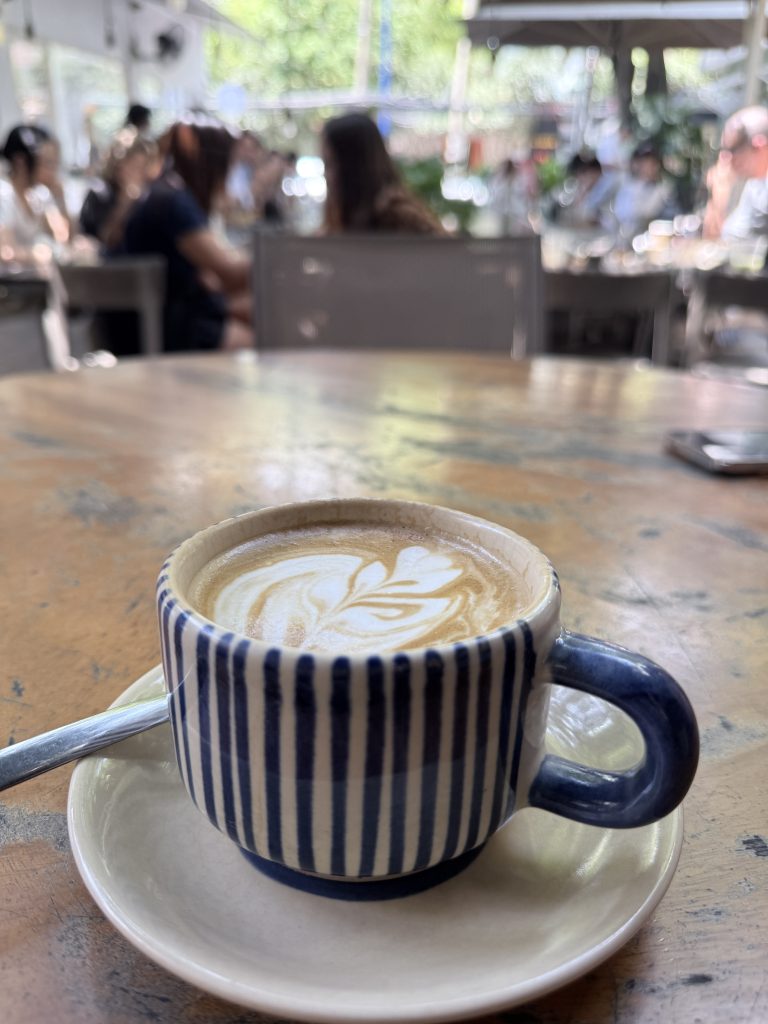
The latte here isn’t just smooth; it leaves a rich, lingering flavor that feels exactly like savoring fresh roasted nuts. For someone who loves the clean finish of black coffee, this was a moment of true revelation, opening my eyes to a whole new charm of lattes.

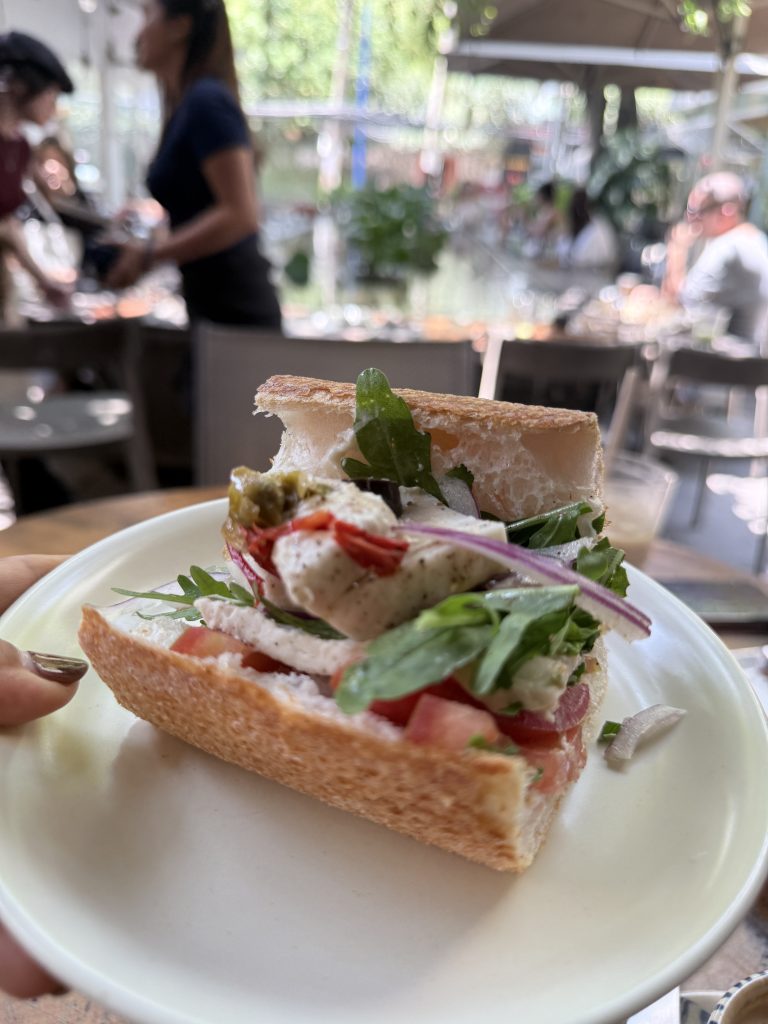
If you visit, there is one item you absolutely must try alongside your coffee: the baguette sandwich. Made with fresh vegetables and wholesome ingredients, it is the signature must-try item at Kashew Coffee.
Photograph by Yvners Notes | © 2026. All rights reserved

What truly makes this space special is its unique atmosphere. It is a shared sanctuary where various local businesses come together under one roof. Here, the hum of conversations from neighboring tables does not feel like noise; rather, it weaves into the air like a gentle background melody, grounding you in the lively rhythm of the city.

With long, communal bar tables surrounding a small, tranquil pond, the space invites you to simply exist. Whether you are sitting alongside a stranger or a friend, there is a sense of shared solitude that is deeply comforting.

When a friend who needed some respite visited me in Vietnam, this was the first place I wanted to bring them. Sitting under the shade of a large, leafy tree, we felt the warmth of the Vietnamese sun—a heat I have grown to love for its vibrant, life-affirming quality. Sharing a crispy, fresh baguette sandwich while watching the light dance through the leaves, I realized that these small, unhurried moments are the true essence of my life here.

If you are ever in need of a quiet corner to breathe, I invite you to pull up a chair at Kashew Coffee. May the gentle hum of the afternoon be the perfect soundtrack for your own rest.

To those of you who love Vietnam as deeply as I do, may this little record of my afternoon serve as a gentle inspiration for your own journey.
Posted on Leave a comment

The Smile That Says “I’m Sorry”:Understanding the Vietnamese Way

When I first moved to Vietnam, one of the biggest cultural hurdles I faced was not the
language barrier, but the smiles. Whenever someone made a mistake—be it a minor
mishap at a local shop or a scheduling error—the reaction wasn’t an apology. Instead, I
was met with a shy, subtle smile.

Photograph by Yvners Notes | © 2026. All rights reserved

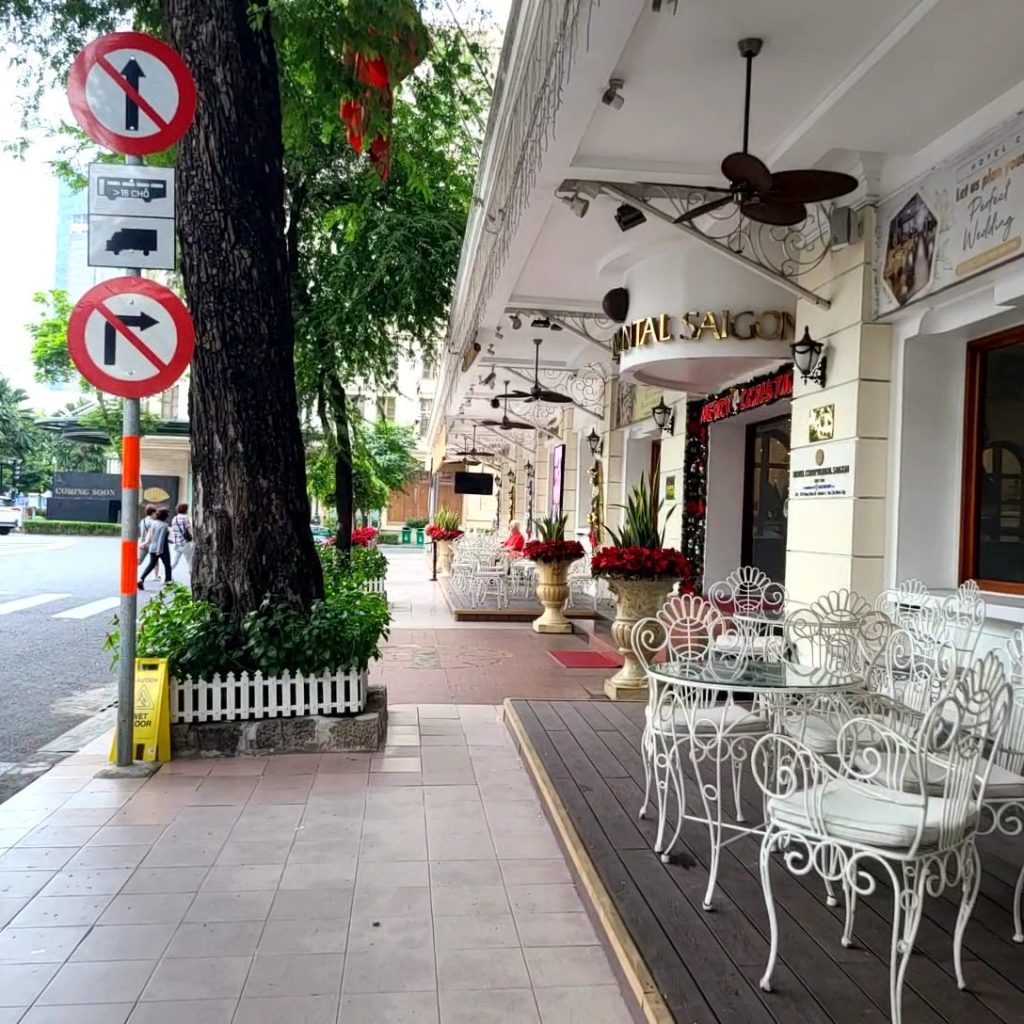
(In front of the Continental Hotel in Ho Chi Minh city)

The streets of Ho Chi Minh City, where countless untold stories and cultural nuances reside.
Initially, I found this deeply frustrating. To me, it felt as if my concerns were being brushed
aside. I wondered, “Are they even aware of their mistake? Do they not feel sorry at all?” I
felt ignored and, at times, even disrespected. In my own cultural framework, a mistake
requires a verbal acknowledgment—a direct “I’m sorry”—to validate the other person’s
feelings.
However, after living here for years and becoming fluent in the language, my perspective
shifted entirely. I began to see beneath the surface. I realized that this smile was never
about disrespect. In Vietnamese culture, directly admitting a mistake can be perceived as
an awkward confrontation that risks one’s “face” and disrupts social harmony. The smile is
a defense mechanism—a gentle, silent language used to diffuse tension and signal, “I am
uncomfortable, please let’s keep the peace.”

Photograph by Yvners Notes | © 2026. All rights reserved

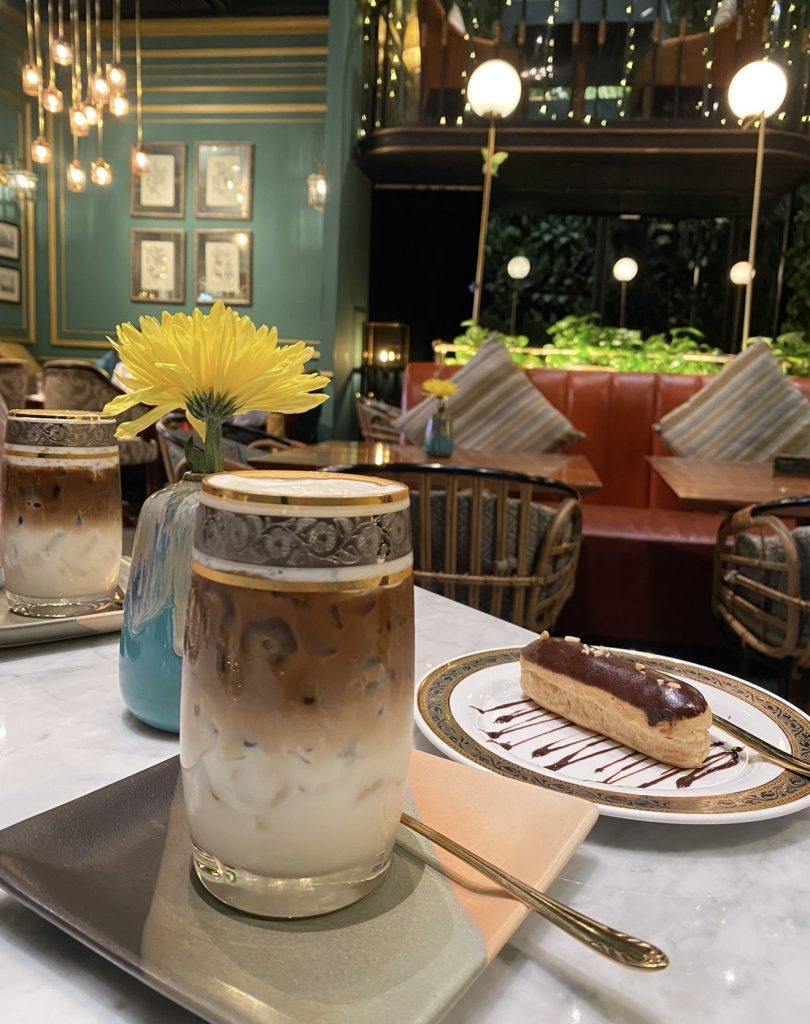
(Runam cafe in Saigon Center)

Finding peace and reflection in a local cafe, where the depth of Vietnamese culture can be felt over a cup of coffee.

Bridging the Cultural Gap
I know that for those from Western cultures, where “sorry” is reflexive, this might remain
difficult to grasp. You might want to ask, “Why not just say it?” But even if it feels foreign,
we must avoid dismissing this culture as “wrong.” These smiles are the result of a value
system prioritizing community harmony. To ignore that history and merely judge from the
outside is a form of disrespect.
That said, I believe there is a space for growth. As Vietnam integrates into the global
community, the need for a new “social language”—one where mistakes are clearly
articulated—is becoming important. True maturity in communication comes when we
embrace the courage of a verbal apology. It doesn’t break a relationship; it strengthens it
through trust.
Now, when I see that smile, I no longer feel anger. I recognize the vulnerability and the
desire for harmony behind it. Understanding a culture doesn’t mean you have to agree
with every aspect; it means acknowledging its roots with kindness while gently
encouraging it toward